
What color does fake money turn? That Awkward Yellow or Black Streak
We’ve all been there. You’re at a high-stakes garage sale, or perhaps you’re buying a vintage gaming console from a guy in a parking lot who looks suspiciously like he lives on energy drinks and mystery. You hand over a twenty, and out comes The Pen.
The cashier or seller swipes it across the bill with the intensity of a Renaissance painter. In that split second, the world holds its breath. Will it be a faint, buttery yellow? Or will it turn a soul-crushing, call-the-cops shade of midnight black?
If you’ve ever wondered what color fake money turns, you’re not alone. It’s the ultimate litmus test of modern society. But beyond the grocery store checkout line, there is a whole world where fake isn’t a dirty word, it’s an art form. From
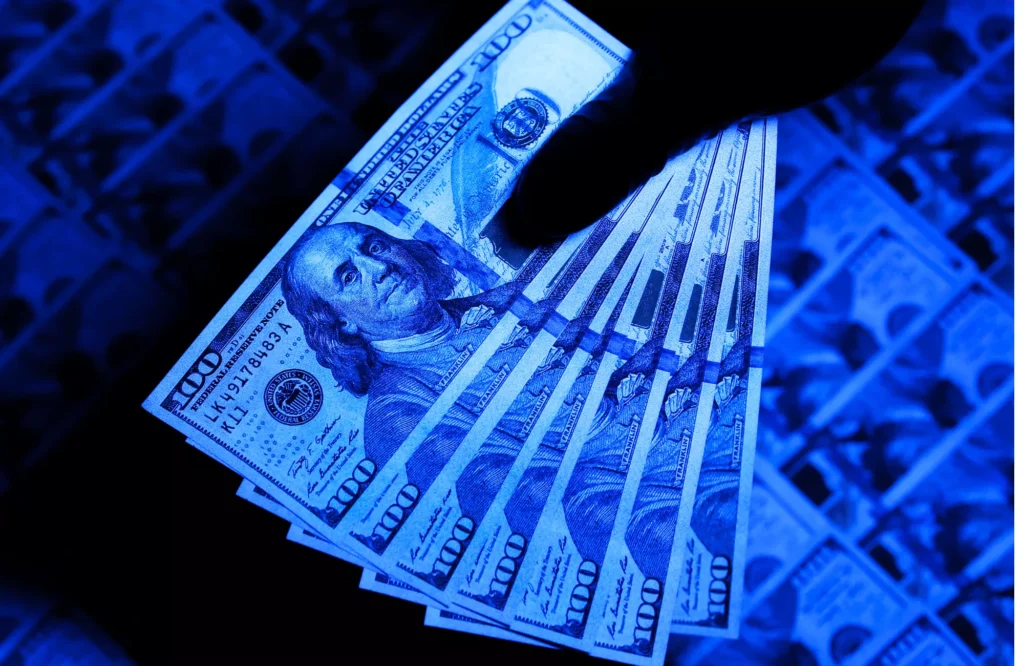
The Science of the Stain: What color does fake money turn
Before we talk about how to use fake money for business and projects like a pro, let’s nerd out on the chemistry for a second.
The counterfeit detector pen contains an iodine solution. Real US currency isn’t actually paper—it’s a blend of 75% cotton and 25% linen. This fabric-like material doesn’t react with iodine.
- The Yellow Streak: On real bills, the iodine stays yellow or clear because there’s no starch to react with.
- The Black/Dark Brown Streak: Most standard paper (like the stuff in your home printer) contains starch. When iodine hits starch, it undergoes a chemical reaction that turns it dark blue or black instantly.
The Twist: High-end counterfeiters have found ways to bypass the pen, which is why the pen test is actually considered a bit old-school by the pros. But for the rest of us, that color change remains the ultimate dramatic reveal.
How to Stay on the Right Side of the Law
We love a good vmoment, but we love not being in prison even more. When you’re looking for fake money for business and projects, quality must go hand-in-hand.
- Depending on your project’s needs, some props are only printed on one side to comply with strict local regulations.
- our high quality counterfeit banknotes have all the security features in place
Pro-Tip: If you are in public, what to use fake money or have a clear sign that you are using props. Nothing ruins a top-quality counterfeit money
The Art of the Prop Look
Why does some fake money look so… fake, while others look like they just fell out of a bank vault? It’s all about the texture and the equipment used in producing the notes
- Non-Glossy Finish: Real money isn’t shiny. The best prop money uses a matte finish that absorbs light rather than reflecting it.
- The Crinkle Factor: Industrial-grade A prop cash uses a specific GSM (grams per square meter) of paper that mimics the sound of real bills being counted.
- High-Resolution Detail: While the portraits and text are altered, the intricate borders and feel should be sharp enough to fool the eyes
FAQ
Because our professional prop money is printed on high-quality, non-starch-based paper (different from standard office paper), it will pass a pen test by staying yellow!
Yes, our high-quality and undetectable money looks more real. You can use it without fear anywhere
Run your fingers over the note to make sure it feels like real currency, Barker said. Real currency has intaglio ink, which is that raised, thick, tar-like ink. If you run your fingers over it, it has a texture to it.

